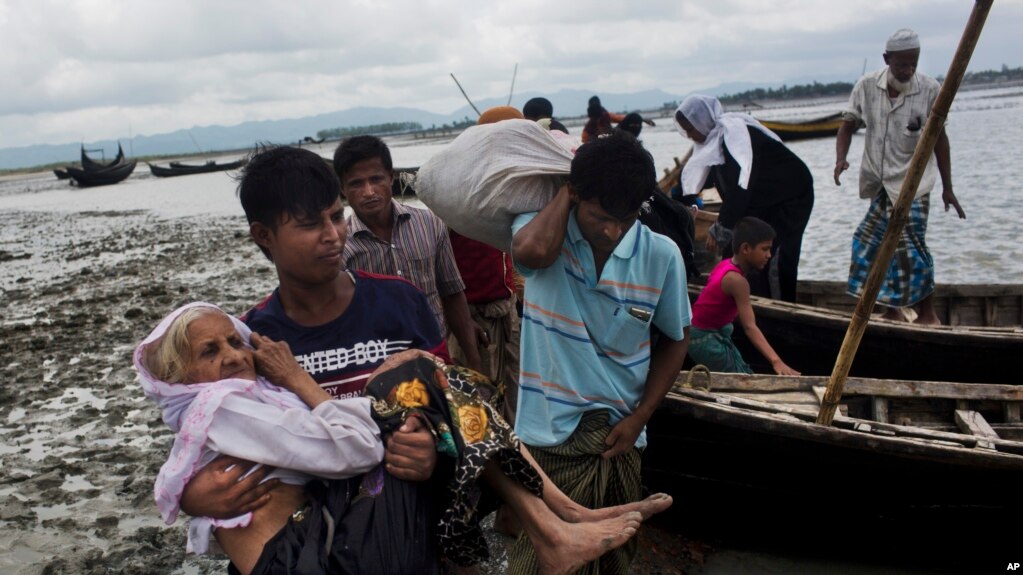
BANGKOK —
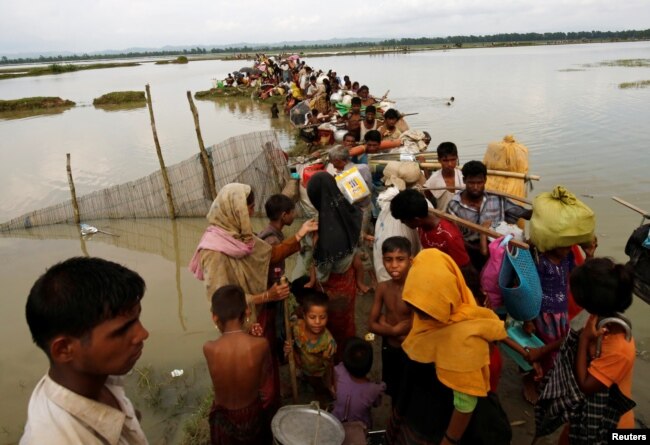 Rohingya refugees wait for boat to cross a canal after crossing the border through the Naf river in Teknaf, Bangladesh, Sept. 7, 2017.
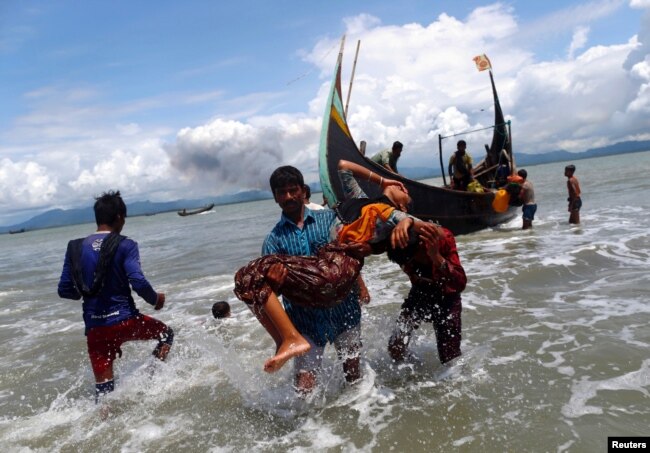 Smoke is seen on Myanmar's side of border as an exhausted Rohingya refugee woman is carried to the shore after crossing the Bangladesh-Myanmar border by boat through the Bay of Bengal, in Shah Porir Dwip, Bangladesh September 11, 2017.
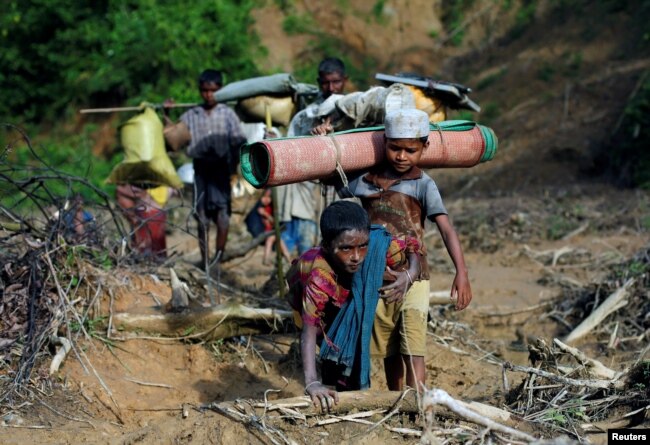 Rohingya refugees walk on a muddy path after crossing the Bangladesh-Myanmar border in Cox's Bazar, Bangladesh, Sept. 8, 2017.
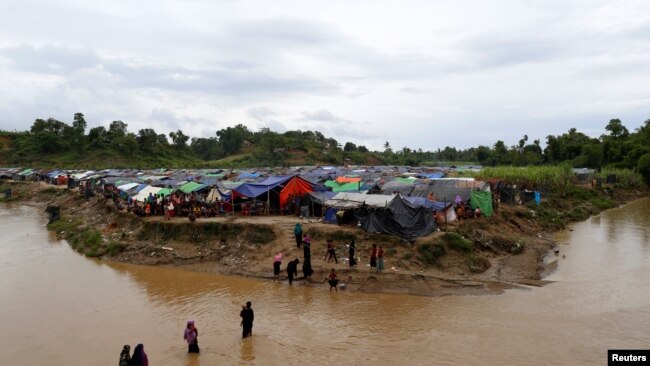 Rohingya refugees cross a stream to reach their temporary shelters at No Man’s Land between the Bangladesh-Myanmar border, at Cox’s Bazar, Bangladesh, Sept. 9, 2017.
When Dhaka Tribune journalist Adil Sakhawat took the 40-minute journey across the Naf River from Bangladesh to Myanmar on Thursday, he passed a long line of boats going in the other direction.
The large canoes were full of Rohingya Muslims fleeing a crackdown on insurgents inside Myanmar's northern Rakhine State. There were 10 to 15 people crammed in each one.
“I saw a hundred boats while I was on the way to Myanmar,” he told VOA. “That was like in a queue, one after one, one after another, one after another. They were crossing the Naf River to come into Bangladesh.”
Adil wanted to learn more about the influx from the Myanmar side and members of the Arakan Rohingya Salvation Army (ARSA) who might have control of the escape route.
While Adil managed to speak to a fighter, what his trip also revealed was the financial toll the exodus has taken on the Rohingya.
Boatmen from Bangladesh are charging more than $100 per trip, and those who can’t afford it can be stranded on the banks for days, hoping for assistance, a kind heart, or even a discount.
“So many Rohingya people do not have that much ability to pay that money and come into the Bangladesh side,” Adil said. “So they were actually waiting to find someone who can help them.”
Described as the largest stateless group in the world, Rohingya Muslims have been fleeing persecution in Buddhist-majority Myanmar for decades.
The trip has rarely been cheap and comes with the risks of trafficking, ransom payments and dangerous weather conditions if traveling through the Bay of Bengal, which connects to both the Naf River and sea routes leading to the rest of Southeast Asia. Authorities in Bangladesh have already recovered dozens of bodies from capsized boats.
But though the dangers are similar, this surge is unlike others in recent memory.
More than 300,000 Rohingya have left Myanmar since the Arakan Rohingya Salvation Army attacked police posts on August 25, according to estimates. A Rohingya resident of Maungdaw, one of the towns in Rakhine State closest to the border, said this week that more than two-thirds of residents had left.
Myanmar says it is hunting militants and has killed more than 370 of them, while losing upwards of a dozen members of its security forces. Rights advocates and the Bangladeshi government say the Rohingya civilian death toll is much higher, possibly in the thousands. The U.N. rights chief has said that what is happening looks like a textbook case of ethnic cleansing.
But while accusations fly back and forth, families are concerned with more pressing matters, like making it to safety. Adil said he saw at least 5,000 people scattered on the banks, waiting to press on.
They were traveling with everything they owned, including domestic livestock, kettles and, in some cases, solar panels taken from their homes.
A spokesman for the U.N. refugee agency said in an email that while it has yet to document boat payments during this latest flow into Bangladesh, the current figure of around $100 is consistent with past prices.
Bangladeshi authorities are beginning to take notice of the lucrative trade and have arrested dozens of boatmen, according to the Home Affairs Ministry and officials working in the border area.
Many were arrested after holding Rohingya refugees until they were able to get relatives inside Bangladesh to produce the payment.
Jahid Hossain Siddique, a sub-district officer in Tekhnaf, which is next to the river on the Bangladesh side, said boatmen in his jurisdiction were charged with creating a “public nuisance.”
He said that middlemen often promised an initial rate but changed it later.
“Their amount is not fixed. They were charging Taka 5,000 ($60) to Taka 10,000 ($122) and even more than the agreed-upon deal they had made with Rohingya refugees,” Jahid said.
But disrupting the networks will only result in more stranded refugees, who will keep waiting for a chance to cross.
The demand remains high.
After Adil disembarked in Myanmar and did some reporting, he went back to make the return trip. But his boatman had already left, and he had to wait for another ride
Comments
Post a Comment